

Paytm Pocket Money for Teens – No Bank Account Needed, What It Means and How to Open It


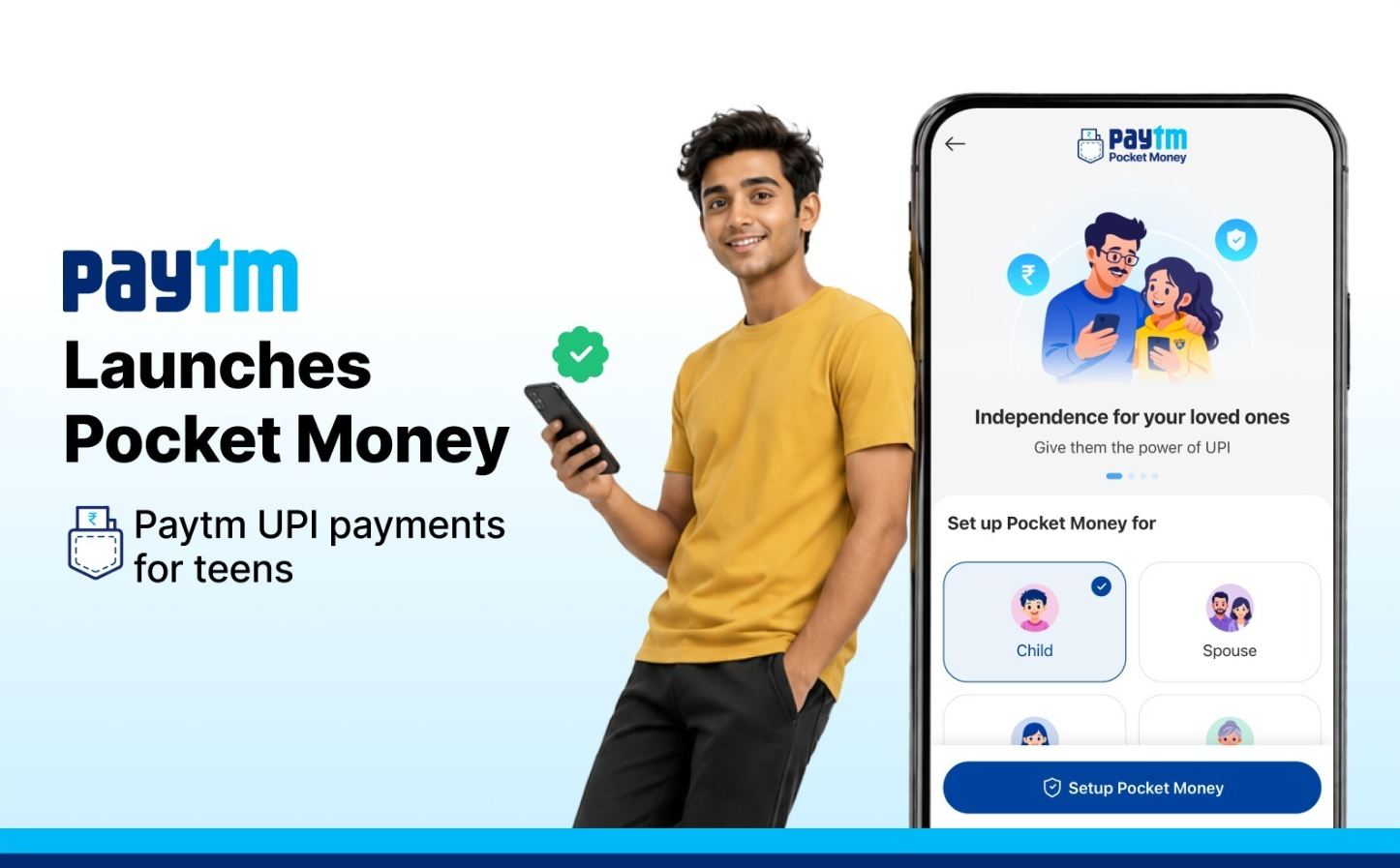
Paytm has launched a new product called Pocket Money, designed for teenagers who want to make digital payments but do not have their own bank account. At first glance, it looks simple i.e. parents or trusted family members can enable controlled UPI spending for teens. But the larger impact is bigger than one app feature. For years, many families have had the same issue. Teens need money for school food, transport, books, and small daily expenses, but handing out cash is inconvenient and hard to track. At the same time, opening a full bank account for a minor can feel like too much process for families who just want safe day-to-day payments.
That is where this launch becomes interesting. It is a “middle path” between cash and full banking.
What Paytm Pocket Money Actually Is
Paytm Pocket Money lets teenagers make UPI payments without opening a separate bank account in their own name. The spending access is linked to a parent or guardian setup, with controls built in. Based on Paytm’s own announcement and coverage reports, the key features include-
- Teen payments without individual bank account setup
- Parent-controlled spending limits
- Real-time transaction visibility
- Ability to modify limits or revoke access
- Spend-summary style tracking for better monitoring
In simple terms we can say that teens can pay independently for small daily needs, while parents stay in control of the boundaries.
Why This Matters for Families
This launch solves a practical family problem, especially in urban and semi-urban India where QR payments are now normal at shops, canteens, and transport points.
1) Safer than carrying cash daily
Cash can be lost, misplaced, or used without records. Digital pockets provide better traceability.
2) Better money habits for teens
Teens can learn budgeting earlier when they see limits and transaction history.
3) Lower operational stress for parents
Instead of repeated cash handovers, parents can set controlled allowances digitally.
4) Better emergency convenience
If a child needs quick top-up for travel or school activity, funds can be arranged faster than cash-based methods.
This makes the product less about “fintech buzz” and more about routine household utility.
How to Open Paytm Pocket Money (Step-by-Step)
The exact app flow can slightly evolve with updates, but as per the official guidance you can follow this process-
- Update Paytm app to the latest version (Android/iOS).
- Open Paytm and tap To Mobile / Contact.
- Select Pocket Money option in the flow.
- Choose or enter the teen’s contact and continue verification.
- Scan UPI QR or enter UPI details as prompted in-app.
- Set a monthly spending limit for the teen account.
- Select primary funding bank account (guardian side).
- Authorize with Paytm UPI PIN to activate.
- After setup, parents can monitor transactions and adjust limits through the app.
Important point to remember that always verify the latest in-app instructions because UI steps can change after updates.
Is It Only for Teens? What Age and Use Case Fit Best?
Public reports position this as a teen-focused product, typically useful for school/college-age users who need controlled digital spending. The strongest use cases are-
- School and coaching canteen payments
- Local transport and quick recharge payments
- Books, stationery, and small purchases
- Everyday digital allowance management
It is not meant to replace full banking for adults. Think of it as supervised financial access for minors and young users.
Conclusion- A Useful Step, If Used Responsibly
Paytm Pocket Money is a practical and timely launch. It gives teenagers controlled digital payment access without forcing immediate full bank-account setup, while giving parents visibility and control. For families, the value is clear which is that safer daily payments, better allowance discipline, and easier monitoring. For teens, it is a real-world introduction to money management in a digital economy. The key is balanced use. Teens can start with small limits, review transactions together, and treat it as a learning tool. If done right, this can be more than a payment feature. It can be a useful first step toward smarter financial behavior.
Discover more from Newskart
Subscribe to get the latest posts sent to your email.

Comments are closed.