

NVIDIA RTX Spark Compact Desktops Bring Big Local AI Power to Small Workspaces, Exploring


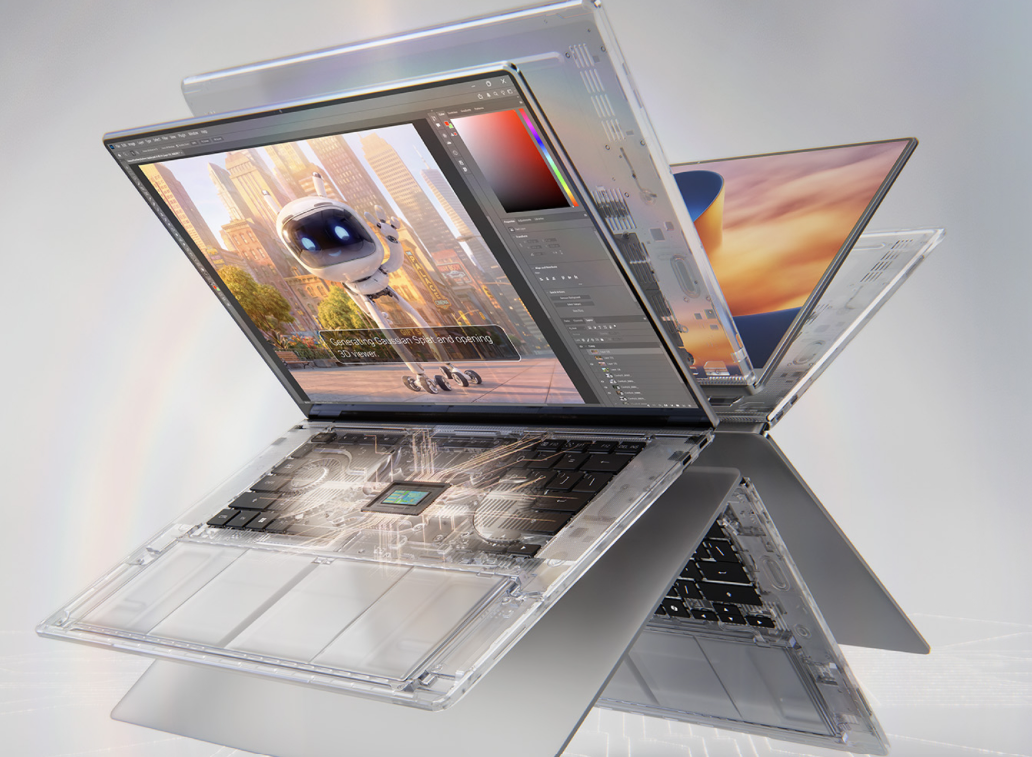
NVIDIA’s RTX Spark compact desktops are built for people who want serious AI and graphics power without placing a large tower PC under the desk. These small Windows machines are aimed at developers, creators, researchers, and AI enthusiasts who want to run demanding work locally.
The first systems are now available from ASUS, Dell, and MSI, while more versions from Acer, Gigabyte, HP, and Microsoft are expected later. The main attraction is simple: a small desktop that can keep AI tasks running even when a user’s laptop is switched off or taken away.
What powers an RTX Spark compact desktop
At the centre is NVIDIA’s RTX Spark platform, which combines a Grace CPU with a Blackwell RTX GPU in one compact system. High-end desktop configurations offer a 20-core Grace CPU and a Blackwell RTX GPU with 6,144 CUDA cores.
CUDA (Compute Unified Device Architecture) cores are processing units inside NVIDIA graphics hardware. They help speed up visual work, 3D rendering, video tasks, and AI calculations.
The most notable feature is up to 128GB of unified memory. Unified memory means the CPU and graphics processor share the same memory pool. This can be useful when working with larger local AI models, large video files, or complex 3D projects because the system does not need to copy as much data between separate memory areas.
NVIDIA says these systems can deliver up to one petaflop of AI performance. That figure is a measurement of how many AI-related calculations a system can process, although real performance will vary by software, model size, memory configuration, and cooling.
What can it do in real life
RTX Spark compact desktops are not designed only for chatting with an AI assistant. They can be used to run local AI models, create images and video, fine-tune supported models, write and test software, and accelerate creative applications.
For example, a video creator could use a compact RTX Spark PC to generate visual assets, work in Adobe applications, and render projects while keeping the laptop free for editing or travel. A developer could run a local coding assistant that reviews files without sending every prompt to a cloud service.
This local approach can be helpful when working with private source code, business documents, or large media files. NVIDIA says locally processed files and code remain on the PC for those tasks, while users can also avoid per-request cloud API charges where local software supports the workflow.
The desktops include 10-gigabit Ethernet support, which is useful for moving large project files between the computer and network storage.
Compact size, but not a basic mini PC
These systems are small, but they are positioned as dedicated AI workstations rather than low-cost office computers. The ASUS ProArt GR1X and MSI EdgeMesa N AI+ are among the early models based on RTX Spark.
A compact desktop can also be a better fit than an RTX Spark laptop for always-on tasks. It can keep processing scheduled work, renders, or local AI-agent jobs at a desk while the user travels with another computer.
How it compares with rivals
Apple’s Mac Studio is a key alternative for creators who prefer macOS and Apple’s tightly integrated software environment. AMD-powered mini PCs and workstations with large shared memory are also becoming attractive options for local AI users.
NVIDIA’s advantage is its broad CUDA software ecosystem and RTX technologies, which are widely used in AI development, 3D work, and GPU-accelerated applications. The Windows-based RTX Spark design may appeal to users who already rely on NVIDIA-focused tools.
However, people buying mainly for gaming or maximum upgradeability should also consider a traditional desktop with a separate graphics card. It may offer more flexibility for future upgrades, depending on the budget and required software.
Facts Input- NVIDIA – RTX Spark compact desktops, NVIDIA Blog, NVIDIA – Set Up RTX Spark as Your Always-On AI Hub
Discover more from Newskart
Subscribe to get the latest posts sent to your email.
