


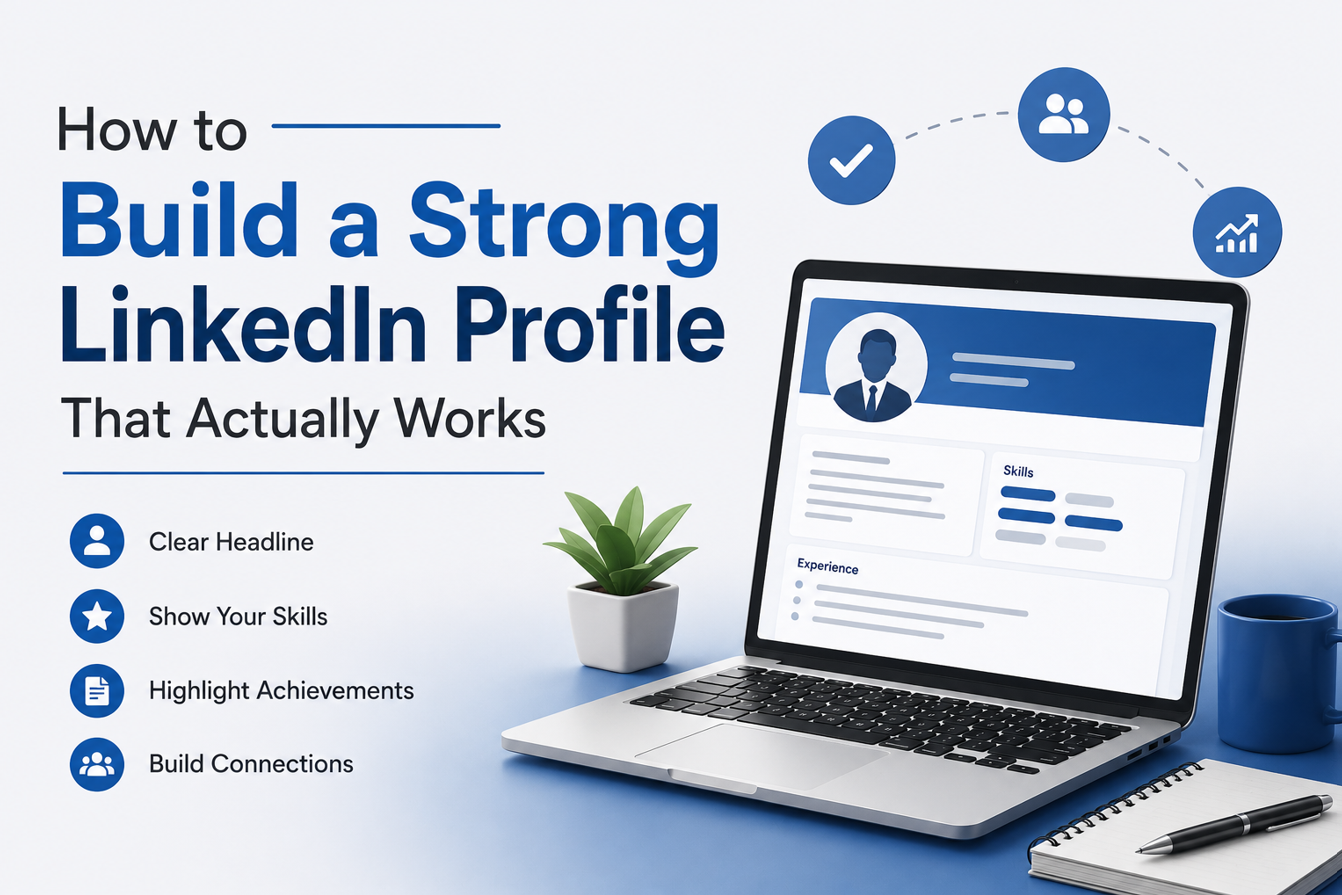
LinkedIn is no longer just an online resume. For many students, freshers, job seekers, freelancers and working professionals, it has become a place where recruiters check your background before they speak to you.
A strong LinkedIn profile can help you appear in searches, build trust, show your skills and connect with the right people. But it does not work like magic. If your profile is empty, outdated or filled with copied lines, it will not help much.
The good news is that you do not need to be famous or highly experienced to build a good profile. You only need to make it clear, honest and useful.
What makes LinkedIn useful
LinkedIn works because it brings your education, work, skills, projects, posts and professional network into one place. A recruiter can quickly see what you do, what you know and whether you may fit a role.
For freshers, it can show internships, college projects, certificates and career interest. For professionals, it can show experience, achievements, industry knowledge and leadership. For freelancers, it can work like a small portfolio.
Think of it as your professional introduction. It should make someone say, “This person looks relevant. Let me know more.”
Start with a clear profile photo and banner
Use a clean profile photo where your face is visible. You do not need a studio shoot. A simple photo with good light, plain background and decent clothing is enough.
Avoid party photos, group photos, selfies with heavy filters or cropped images where another person’s shoulder is still visible.
The banner image can be simple. You can use a clean background related to your field, your work area, or a plain professional design. Do not overload it with too much text.
Write a headline that says more than your job title
Your headline appears near your name, so it matters. Many people write only “Student” or “Looking for job.” That does not tell much.
A better headline explains your field, skills or career goal.
Example for a fresher-
“B.Com Graduate | Excel, Accounting and GST Basics | Interested in Finance Roles”
Example for a tech student-
“Computer Science Student | React and Python Projects | Aspiring Software Developer”
Example for a working professional-
“Digital Marketing Executive | SEO, Content Strategy and Google Ads”
Keep it simple. Do not add too many keywords just to look impressive.
Make the About section sound human
The About section is your short story. It should explain who you are, what you do, what skills you have and what kind of work you are looking for.
Avoid lines like “I am a dynamic and passionate professional seeking opportunities in a reputed organization.” This sounds too common.
A better fresher example-
“I am a final-year commerce student interested in finance and operations. I have worked on Excel-based reports, basic GST invoices and college event budgeting. I am currently learning Tally and looking for entry-level roles where I can build practical finance skills.”
This feels real because it is specific.
Add experience, internships and projects properly
If you have work experience, describe what you actually did. Do not copy your job description.
Instead of writing –
“Responsible for social media.”
Write –
“Created weekly Instagram posts, tracked engagement and helped increase page activity during a college fest campaign.”
Freshers can add internships, college projects, volunteering, freelance work, family business support or event work. If you built a project, explain the tools used and the result.
For example –
“Built a portfolio website using HTML, CSS and JavaScript to showcase academic projects and contact details.”
This gives recruiters something real to discuss.
Use the skills section carefully
Add skills that match your career path. If you are applying for finance roles, skills like Excel, accounting, GST basics, financial reporting and Tally may help. If you are going for tech roles, add Java, Python, SQL, React, Git or cloud basics if you know them.
Do not add skills you cannot explain in an interview. A recruiter may ask about them.
Also, keep your strongest skills near the top. Your profile should quickly show what you want to be known for.
Show certificates, but do not depend only on them
Certificates can support your profile, but they should not be the main story. A certificate says you completed a course. A project shows you can apply the learning.
If you complete a digital marketing course, create a sample SEO plan. If you learn data analytics, build a small dashboard. If you learn coding, upload projects to GitHub and add the link.
This makes your profile stronger than someone who only lists course names.
Post sometimes, but keep it useful
You do not need to post every day. You also do not need to write long emotional stories.
Post when you have something useful to share. It can be a project you completed, a lesson from an internship, a book summary, a career learning, an industry update or a simple explanation of a topic you are studying.
Example –
“I created my first Power BI dashboard using sample sales data. The most useful lesson was learning how to clean messy data before making charts.”
This sounds natural and shows growth.
Build your network with purpose
Do not send random connection requests to thousands of people. Connect with classmates, seniors, teachers, recruiters, alumni, industry professionals and people from companies you admire.
When sending a request, add a short note if possible.
Example –
“Hi, I am a final-year engineering student exploring data analyst roles. I found your profile helpful and would like to connect.”
After connecting, do not immediately ask for a job. Build a normal professional conversation first.
Ask for recommendations when you have earned them
Recommendations can make your profile more trusted. Ask teachers, internship managers, clients or colleagues who have seen your work.
Keep the request polite and specific.
Example –
“Hi, I enjoyed working on the sales report project during my internship. If you are comfortable, could you write a short LinkedIn recommendation about my work and learning attitude?”
A real recommendation is much better than a generic one.
Keep your profile updated
Your LinkedIn profile should not be updated only when you are desperate for a job. Add new projects, internships, skills, certifications and achievements as they happen.
Also check whether your resume and LinkedIn profile match. If your resume says one thing and your profile says another, recruiters may get confused.
Update your location, current role, email visibility and job preferences if you are actively looking.
Does LinkedIn really work
Yes, LinkedIn can work, but only if you use it properly. A complete profile, clear headline, relevant skills and regular activity can improve your visibility.
But LinkedIn will not replace real skills. It can help people discover you, but your work, communication and interview performance still matter.
Think of LinkedIn as a bridge. It can connect you to recruiters, clients, mentors and opportunities. You still need to walk across that bridge with preparation.
Conclusion – Key takeaways
Building a strong LinkedIn profile is not about using fancy words. It is about making your professional identity clear.
Use a clean photo, write a useful headline, make your About section specific, add projects and skills, post helpful updates and connect with the right people.
LinkedIn does work when your profile shows real effort. Keep it honest, keep it updated and use it as part of your career plan, not as a one-time job search trick.
Discover more from Newskart
Subscribe to get the latest posts sent to your email.

Comments are closed.