


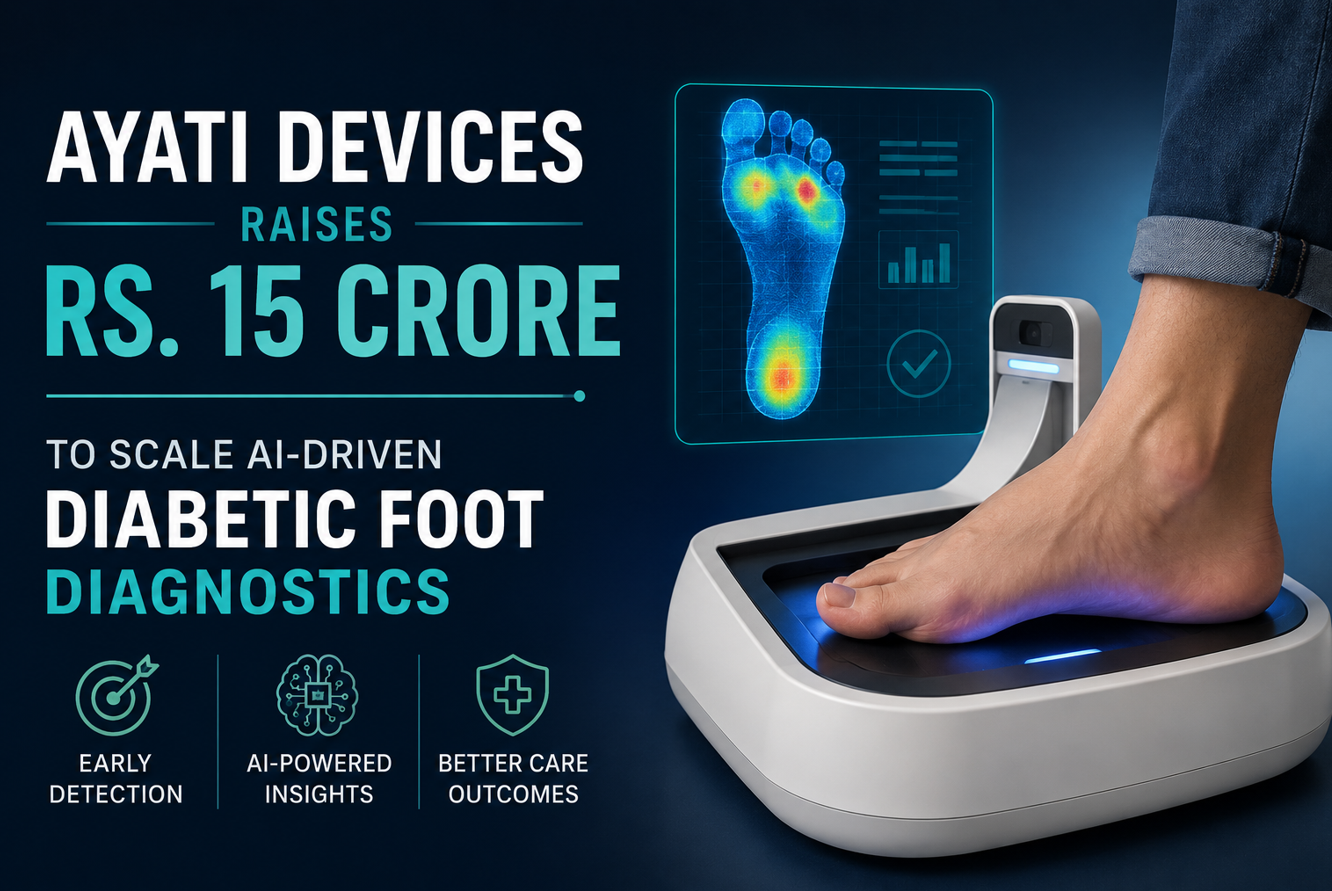
Ayati Devices has raised Rs. 15 crore in a Pre-Series A funding round led by Inflexor Ventures. The Bengaluru-based medtech startup will use the capital to scale its AI-driven diabetic foot diagnostics platform and expand its reach in India and global markets.
Ayati is working on a medical problem that often stays hidden until it becomes serious. Many diabetes patients slowly lose sensation in their feet. If nerve damage or poor blood flow is not caught early, a small wound can turn into an ulcer, infection or even amputation.
That is the gap Ayati Devices wants to solve. Its products help doctors screen diabetic foot complications faster, more objectively and closer to the patient.
What Ayati Devices Does
Ayati Devices builds diagnostic tools for diabetic foot complications and peripheral vascular disease. In simple words, its devices help doctors check whether a diabetes patient has nerve damage, poor blood circulation or weak tissue-level blood flow in the feet.
The company’s platform covers different parts of the diabetic foot diagnosis journey. Vibrasense is used for neuropathy screening. Neuropathy means nerve damage, and in diabetes patients, it can reduce the ability to feel pain, heat or pressure in the feet.
Vibrasense+T goes deeper by checking both large and small nerve fibre function. Vasosense is used to detect peripheral artery disease, which happens when blood flow to the limbs becomes poor. Angiocam focuses on tissue perfusion imaging, which helps doctors understand blood flow at the tissue level.
Ayati also offers the PODIA Trolley, a screening station designed around a pay-per-test model. This can be useful for clinics and hospitals that want to run diabetic foot screening without heavy upfront device investment.
Founders And Founding Year
Ayati Devices was founded in 2019 by Nishant Kathpal and Pankaj Inchulkar. The company has been incubated at IIT Bombay’s SINE, which supports technology-led startups coming out of research and innovation programs.
Nishant Kathpal is the founder and CEO of Ayati Devices. He has been closely associated with the development and commercial journey of its diabetic foot screening technology.
This founder background matters because medtech is not easy to build. A startup in this space must handle product engineering, clinical use, regulations, manufacturing and doctor trust at the same time.
Why The Rs. 15 Crore Funding Matters
The fresh funding will help Ayati Devices move from product availability to wider scale.
According to reports, the company plans to use the capital for Angiocam’s commercialization, go-to-market expansion in India and abroad, manufacturing and supply chain capacity, AI-enabled diagnostics R&D, regulatory approvals, intellectual property growth and team building.
That is a fairly broad plan, but it makes sense for a medical device company at this stage. Ayati already has products in the market. Now it needs to make them easier to access, easier to deploy and stronger from a technology and regulatory point of view.
For example, a hospital may want neuropathy screening, vascular testing and tissue perfusion imaging in one connected workflow. If Ayati can offer this as a practical platform, it can become more useful than a single standalone device.
The Main Aim Of The Funding
The main aim of the funding is to make diabetic foot diagnostics more accessible and scalable.
Many advanced diagnostic tools are usually found in large hospitals or specialist centres. But diabetic foot risks do not begin only when a patient reaches a big hospital. They often begin quietly at home, in small clinics or during regular diabetes check-ups.
Ayati wants its tools to work in hospitals, primary care clinics and community screening programs. That matters in India, where many patients may not visit specialists until symptoms become serious.
A simple example explains the need. A patient with long-term diabetes may not feel a small injury under the foot because of nerve damage. If a clinic can detect neuropathy early, the doctor can advise better footwear, regular monitoring, sugar control and specialist care before the condition worsens.
That early diagnosis can reduce pain, cost and risk for the patient.
Current Reach And Market Opportunity
Ayati Devices has deployed more than 10,000 devices across over 30 countries. The company also has regulatory clearances in major markets, including India, the US, Europe, Sri Lanka, Malaysia and the UAE.
Ayati’s addressable market is around US$ 15 billion globally and US$ 1.4 billion in India. This includes diabetic neuropathy, peripheral vascular disease and tissue perfusion imaging.
These numbers show why investors are interested. Diabetes is a large and growing healthcare challenge, and foot-related complications can become expensive and life-changing if missed early.
Products like Ayati’s sit at the meeting point of preventive care, medical devices and AI-supported diagnostics.
Why AI Matters In This Space
AI in healthcare can sound like a buzzword, but in diagnostics it can be practical when used carefully.
In Ayati’s case, AI-enabled diagnostics can help doctors interpret screening data more consistently. It may support faster reports, better risk scoring and easier follow-up for patients.
This does not mean AI replaces doctors. It means doctors can get clearer measurements and decision support. In busy clinics, that can save time and improve screening quality.
For diabetic foot care, this is useful because many patients need regular monitoring, not just one-time testing.
Competitors And Similar Companies
Ayati Devices works in the broader Indian medtech and digital diagnostics space. Its direct competition may include global device makers offering neuropathy, vascular and foot pressure assessment tools.
In India, companies such as Remidio, Niramai, SigTuple and Tricog operate in nearby healthtech categories, though they do not all focus on diabetic foot diagnostics. These startups show how Indian medtech is moving toward early detection, portable devices and smarter clinical workflows.
Ayati’s sharper focus is diabetic foot care. That focus could help it build deep expertise in one serious disease area instead of spreading itself too thin.
Challenges Ahead
Ayati has a strong opportunity, but scaling medical devices is never simple.
Hospitals need training, service support and proof that devices work reliably in real clinical settings. International expansion also brings more regulatory work, distributor management and after-sales support.
Affordability will be another key factor. If Ayati wants to reach smaller clinics and community programs, its solutions must remain practical in cost as well as performance.
The company’s pay-per-test model could help here, especially for centres that want screening access without large upfront spending.
Conclusion With Key Takeaways
Ayati Devices’ Rs. 15 crore Pre-Series A round is a meaningful step for India’s medtech ecosystem. The company is working on a real healthcare problem that affects millions of diabetes patients but often gets less attention than it deserves.
With support from Inflexor Ventures, Ayati now has more capital to commercialize Angiocam, expand its diagnostic platform, grow internationally and strengthen its AI-led product roadmap.
Key takeaways –
- Ayati Devices has raised Rs. 15 crore in Pre-Series A funding led by Inflexor Ventures.
- The startup was founded in 2019 by Nishant Kathpal and Pankaj Inchulkar.
- It builds diagnostic tools for diabetic foot complications and peripheral vascular disease.
- The funding will support Angiocam commercialization, global expansion, manufacturing, R&D and regulatory approvals.
- Ayati has deployed more than 10,000 devices across over 30 countries.
Facts Input- Pharmabiz
Discover more from Newskart
Subscribe to get the latest posts sent to your email.

Comments are closed.