


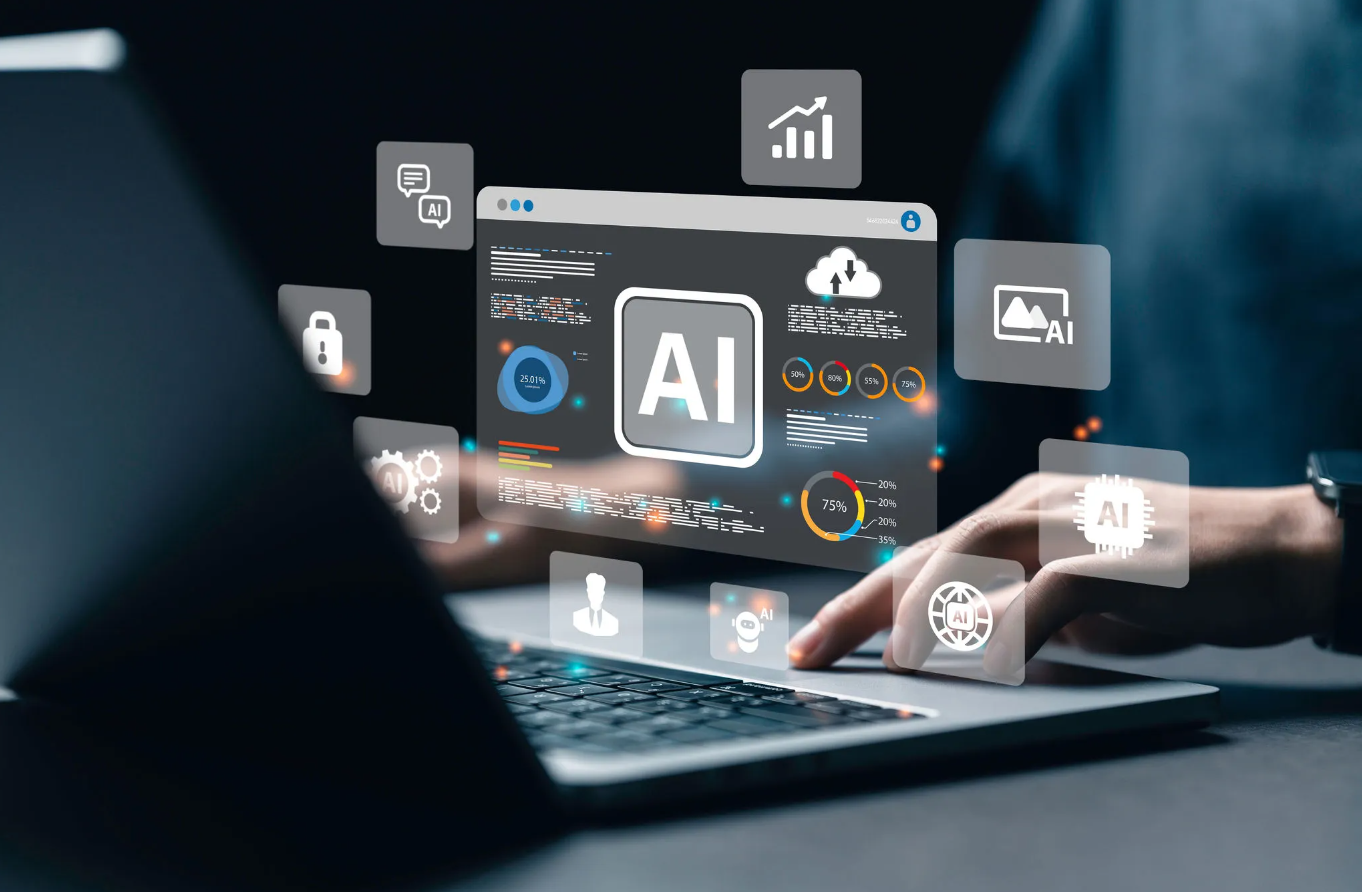
A lot of people hear the term “GenAI” and assume it is only for coders or tech companies. That is no longer true. Generative AI is a new branch of Artificial Intelligence which is now used by students, office teams, freelancers, shop owners, and even families planning daily tasks. If you have ever asked a tool to draft an email, summarize a long document, or create an image from a text prompt, you have already seen GenAI in action.
Still, confusion remains. Is it a search engine? Is it always correct? Will it replace jobs? The best way to understand GenAI is to see it as a practical assistant which is fast, creative, and useful, but still dependent on human judgment.
What is GenAI in simple words?
GenAI, short for Generative Artificial Intelligence, refers to systems that can create new content/code and image/video/audio based on patterns learned from large amounts of data and large language model (LLM). Unlike traditional software that only follows fixed instructions, GenAI can produce fresh text, images, audio, code, and even video when given a prompt (designed by human).
For example, a normal calculator gives one correct output from one formula. GenAI can give multiple possible outputs for the same request because it is generating language or media based on probability and context. That is why responses can vary in tone, structure, and detail.
The most common GenAI tools today include chat assistants, writing copilots, design generators, coding helpers, and meeting-summary tools. They are built to reduce the time spent on repetitive or first-draft work. Instead of starting from a blank page, users start with a draft and refine it.
But one point is important which is GenAI can sound confident even when it is mistaken or wrong output is generated. So, accuracy checks are essential which is done by human itself who is expert in his field, especially in health, legal, financial, or academic topics. Think of GenAI as a smart junior assistant, not the final decision-maker.
How GenAI is helping people across daily life and work
The biggest benefit is speed. People use GenAI to write emails, prepare presentations, translate messages, create captions, and summarize reports in minutes. Tasks that once took an hour can often be completed much faster with the help of GenAI.
Students use it to simplify difficult topics, generate revision notes, and build practice questions. Professionals use it to draft proposals, convert rough ideas into explained and up to the mark text, and automate routine communication. Small businesses use it for product descriptions, social media content, and customer support replies.
In creative fields, GenAI helps with brainstorming. Writers use it for idea generation, marketers test multiple campaign angles, and designers explore visual directions quickly before finalizing concepts manually. Developers use AI coding assistants to debug faster and generate boilerplate code, which frees time for deeper engineering work.
GenAI is also improving accessibility. People who are not fluent writers can still write clearly with AI-assisted writing and editing. Users with language barriers can translate and reframe content in a more natural tone though there are already some translators available online. Thus for most of the workforce and common people, this is not just convenience but it is empowerment tool.
What to keep in mind before relying on GenAI
While GenAI offers clear advantages, it works best with responsible use. You should always verify facts, should avoid sharing sensitive personal data, and should always review outputs before publishing or sending them. In workplaces, teams should define where AI is allowed and where human approval is mandatory. The smartest users treat GenAI as a collaborator. They give clear prompts, ask follow-up questions, and then apply domain knowledge to improve the output. This human-plus-AI approach usually delivers better results than either one alone.
In conclusion, GenAI is not magic and not a threat by default. It is a powerful tool that can help people think faster, work smarter, and communicate better when used carefully. The future will likely belong to those who learn how to combine AI efficiency with human judgment, creativity, and responsibility.
Discover more from Newskart
Subscribe to get the latest posts sent to your email.

Comments are closed.